November brings memories and lessons; including some forgotten and some unlearned.
The whole world observes the 11th hour of the 11th month every year as ‘Remembrance Day’, commemorating the sufferings of and sacrifices by the brave soldiers. Rather than go into the depths of other causes for the war such as political aspirations of power, polarisation through alliances, or new world order post 1918, I would focus only on the brave heroes, many sung for and many unsung ones.
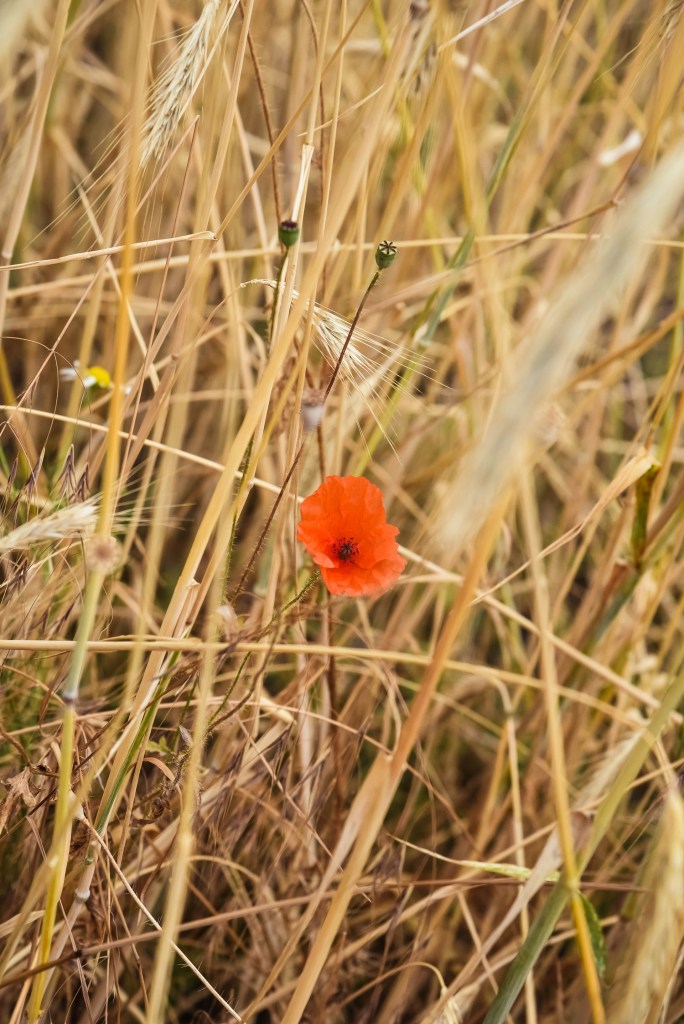
Everyone knows the tale about Lieutenant John McCrae, a Canadian doctor, who sighted the poppies growing on the scars of the battle-ridden fields defying the ugliness of war by standing steadfast in their beauty. Thence, he was inspired to write the famous poem, ‘In Flanders Fields,’ after losing a friend on the battlefield of Ypres in 1915.
Different countries have war memorials to remember the fallen soldiers. Regardless of the political ambitions of the few leaders, every brave soldier in the field believed that he/she was fighting for the freedom of humanity at large and a democratic world order.
It’s the ‘belief’ of every soldier that we must remember and celebrate.
But what about thousands of those brave souls who too had the same belief and fought valorously, yet remain anonymous to the mainstream world?
Yes, I am talking about the Sikh Soldiers from the colony of South Asia who fought as British Indian soldiers in WW1 and also WW2.
Despite being from the colonial state, Sikhs volunteered to fight the battle rather than be forced, because of one belief only- That this was a just war for the greater good of humanity and for restoring peace in the world. These Sikh soldiers were motivated by the ideology of their Gurus. British regime understood this element in Sikhs and thus encouraged them to join the army. Around a hundred thousand Sikh soldiers fought on various fronts during WW1 & WW2.
They not only faced the expected deadly challenges of a battlefield as others, but were also subjected to callous discrimination in the soldier camps- for example, they received poorer living conditions, denied any leave, general segregation, inferior diet and racial abuse. Not much is talked about this, obviously. Unfortunately, every chapter that scars the glory of human history is often hushed, instead of learning valuable lessons from it and evolving thereby.
However, against all the odds, the Sikh soldiers fought with the same commitment as any other soldier from the diverse world.
This article narrates the contributions of, awards to and betrayal of the Sikhs, as soldiers and as a community since 1914.
In this context, one has to also understand a few chronological facts in history, depicting how the Sikh spirit arose as baptised with blazing radiance from every fire of injustice.
So, what derived a Sikh to fight despite many hostile circumstances? The answer is hidden in the Sikh- character.
The very birth of Sikh philosophy emerged from the spirit of fight- Fight for the basic rights to life and dignity for all, Fight against injustice, Fight against religious rigidities and social discriminations, Fight for equal rights for all, including women’s rights, Fight against dogmatic pressures to free spiritual vision, and so on. The only exception in this spirit to fight remains ‘never to raise arms in offence or against defenceless.’ Otherwise, a Sikh should always be ready to fight morally and ethically.
Let’s go back a bit and understand how the seed of honour and fortitude was sown in the Sikh mindset.
The founder of Sikhism, Guru Nanak, challenged the very first Mughal emperor in the sub-continent, called Babur, who ruled through oppression. No one dared to protest against the autocratic authority but the Guru. According to the historical accounts, Guru Nanak told the king on his face that he was not Babur (meaning tiger) but ‘Jabur’ (meaning tyrant). He remained defiant by this statement which resulted in his imprisonment. Sometimes, even peaceful defiance can be mighty resolute. Thus, the righteous battle for justice began for a Sikh from the very beginning.
Impressed by Guru Nanak’s spiritual spirit, yet bold demeanour, Babur eventually released him from the prison to continue to spread the sacred word and Sikhi spirit. The first battle by the first Sikh Guru was thus won, but there remained many more battles to fight.
Hope this explains why Sikhs volunteered willingly to participate in both the world wars. Sikhs fought on many fronts, including, the first battle of Ypres, the battle of La Bassee, Somme, Egypt, Mesopotamia and Turkey, Burma, Italy, and North Africa amongst others.
To fight one must know how to fight. The artillery of a battle comprises clarity of mission, belief in the cause, commitment to the action, and determination to fight till the end. Technical training is functional only when the character of a warrior is resolved. The sixth guru, Guru Hargobind Singh started the institute of ‘Gatka,’ the Sikh martial art, to complete the saint-soldier entity of a sikh. After all, it’s not enough to believe in self-defence, unless one knows how to.
The Sikh regiment won 16,52 gallantry awards for their great services during WWI. Four Victoria crosses and many other gallantry awards too were won by Sikh soldiers during WW2. Altogether, around 400,000 Sikhs fought in both the battles, with 84,000 dying and 100,000 injured.
Through the wars for freedom and subsequent peace, Sikhs were fighting for their own dream for self- emancipation too, since they had lost their sovereign state of Khalsa Raj to the colonial ambitions of the East India Company. In 1757 all the 565 (some say more) princely states in South Asia were conquered and unified by the British Empire to manage a vast area as one single colony. which was collectively named India.
However, the Sikh kingdom in the sub-continent remained a sovereign country until 1839 when the Sikh emperor of Punjab, Maharaja Ranjit Singh was allegedly killed by deceit. According to various written accounts, he is believed to have been slowly poisoned through his drink and food, over a period of time, conspired by a few opportunist courtiers and royal physician. Nevertheless, there is a proven history of his numerous brave adventures on the battlefield and as a shrewd statesperson. His army and administration consisted of all castes, creeds, nationalities and colours including many Europeans. The imperial forces could not win against him in direct combat on a battlefield; hence deceitful tactics were used.
He was an open-minded and unbiased king who treated his subjects as citizens. In fact, in 2020, the BBC World Histories Magazine conducted a global poll whereby Maharaja Ranjit Singh was voted as the greatest leader of all time. But he was a threat and a formidable enemy for the imperial ambitions.
After his death and kingdom conquered, his infant son, Maharaja Dilip Singh was forcefully separated from his mother and brought to England, and converted to Christianity, so that there was no claim to the throne left and thus, the kingdom of Punjab was made part of India by the British colonial power.
The courage instilled in Maharaja’s army outlived his mortal life and was transferrable. Hence, the Sikhs served in the British Indian Army with the same valour and commitment.
I would also add further that Sikhs are bonafide allies who would guard the trust invested in them with life, literally. The battle of Saragarhi is a prime example. In this battle on the Northwest frontier between British imperial forces and Afghan tribes on September 12th, 1897, only 21 Sikh soldiers of the 36th Sikh regiment fought against 10,000 Afghan tribesmen for more than 10 hours. Even though the front was lost, the defiant regiment refused to surrender and fought to the end. Afghans posted 180 causalities and hundreds were wounded. Many compare the battle of Saragarhi with the battle of Thermopylae when 300 Spartans fought against the Persian army in 480 BC. These Sikh soldiers were awarded ‘The Indian Order of Merit’ posthumously which was the highest gallantry award in the British Empire. With such great inheritance, the Sikhs formed 20% of the British Indian Army, even though Sikhs have always been merely between 1 to 2 per cent of the total Indian sub-continent population, even to the day.
Now, I would turn over a sad page in history, with a pang in my heart. WW1 ended in 1918, and the betrayal of the Sikhs began.
While the wider world hardly knew who the Sikhs were despite their contributions, the British imperial forces massacred hundreds of defenceless people in Jallianwala Bagh in Punjab (The native state of Sikhs in India) on the 13th of April 1919. Not only was their dream to reinstate a dignified sovereign state for themselves in the new world order crushed but they were reduced to being part of the Indian colony, where they continue to fight for their basic rights to this day.
The 13th of April is also one of the holiest days for the Sikhs when in 1669 Guru Gobind Singh, the tenth Sikh Guru initiated Sikhs into the discipline of Khalsa (the pure) faith and established them as a community. It’s been celebrated as the birthday of Khalsa Sikh ever since.
I think I’ll skip the details about Khalsa Panth for another time, except to mention that since then the Sikhs wear turbans, bear unshorn hair, and Guru bestowed the title of ‘Singh’ (lion) upon every sikh man and ‘Kaur’ (princess) upon every sikh woman. These titles began to be used as middle names by the Sikhs.
On the 13th of April 1919, Punjabis gathered in Jallianwala bagh (park) of Amritsar in Punjab to celebrate Khalsa day and also share the community concerns regarding the atrocities by the tyrannical regime. The gathering comprised of elderly, women and children too. So, it was absolutely a peaceful and unarmed congregation. Yet, Sir Michael O’Dwyer, the governor of the then Punjab ordered indiscriminatory shooting on the masses within the enclosure of the bagh, where they had nowhere to run or hide. In desperation many jumped with babies in the well situated in the vicinity to save themselves but drowned, while others lay dead, scattered on the bloodied ground of the park. Even engineered data estimates the death toll above 1,500 and as many injured seriously. But disputed numbers challenge this data to this day.
Let’s light a candle in the memory of those children, pregnant women, elderly men and women too…all were innocent human beings, hoping to be free and happy.
Remember, a sikh never offends but will always defend and avenge gross abuse. It took a Sikh, called Udham Singh, 21 years to avenge the tyranny against the defenceless fellow Punjabis. He shot Michael O’Dwyer in Caxton Hall in 1940, when O’Dwyer said proudly in his speech that if given a chance he would repeat the Jallianwala Bagh action again and again. Udham Singh’s attack was not just on the person who gave orders to kill hundreds of innocent people but was an attack on imperialism itself and on the forced subjugation of human beings. Udham Singh didn’t try to run but waited for the police to arrive and arrest him, knowing that he would be hanged. He considered that his duty as a soldier was done.
Another exceptional trait of a sikh character is- to never fester hatred for the whole community because of the wrongdoings of one or a few. This is their strength to hold on to belief in the greater goodness of humanity, despite the discrimination against themselves. Hence, Sikhs live in the UK today as law-abiding citizens and as respected members of the great British democratic community. They represent all in politics, the army, and sports and serve in diverse fields like medicine, teaching, and other institutes. Sikhs are sincere to the land they live on, by their commitment to the teachings of their gurus. The masses in any country could bond with one another if it weren’t for the dividing politics by the deep states. As such, the battle for a saint-soldier continues, despite democracy being restored in most parts of the world since 1945, at least in relative terms though a lot needs to be done to apply its principles to the masses. Hence, the saint cannot sleep, and the soldier shall never give up.
The reason for the betrayal of Sikhs, in my view, is deep-rooted fear in the psyche of the opposed forces – History bears testament to the fact that when someone speaks up, there’ll be forces trying to mute them; When someone is capable to fight back, there’ll be forces trying to break them, and if someone is progressive, there’ll be forces trying to suppress them. Every nation desires a strong ally but ensures it’s not equal and never rises above themselves. Hence, the race to develop more devastating weapons continues. Fear of not what ‘is’, but what ‘could be’- typical symptom of insecurity and self-doubt. The concept of being ‘the’ Super-power in the world has not changed since the human mind began to desire control of other human beings; the only difference is that the banner of hard imperial power is changed for soft democracy.
Nevertheless, Sikhi in a Sikh will never wither, just like a poppy flower that can grow even in a harsh desert.
In fact, we all are soldiers; we just need to recognise the inner spirit to fight righteously and morally by invoking the courage to stand up to the nefarious forces that threaten the very core of humanity. Let’s not mute this soldier, and ensure that no noble sacrifice is ever betrayed again. If not, life can easily drift through couch, coffee and headphones, with no consequence. We have a choice to make.
I’ll end the first part of my article with a hope reflected in this quote by Minot J. Savage- ‘The brave die never, though they sleep in dust. Their courage nerves a thousand living men.’
‘
** To continue: The next part in this saga, teaching us valuable lessons and testing the element of humanity in our hearts. **
 Universal Spirituality In A Sikh Spirit
Thank you for sharing this powerful reflection. It’s a poignant reminder of the sacrifices made by countless brave individuals, especially the Sikh soldiers, whose courage and commitment remain largely unsung.
LikeLiked by 1 person
Gratitude from the depths of my heart to your humane and hearty acknowledgement. Value your kind comment. May you be blessed always. 🙏🎉❤
LikeLiked by 3 people
Be Blessed and Continue to be a Blessing.
LikeLiked by 1 person
🙏🙏🙏
LikeLiked by 2 people
🙏🙏
LikeLiked by 1 person
Amazing
LikeLiked by 1 person
This is indeed a profound article and the flower it is very beautiful!
LikeLiked by 1 person
Thank you for your kind acknowledgement. May you stay blessed always. 🙏🙏🎉🎉❤❤
LikeLiked by 2 people
Thank you, you too much blessings to you and your life ❤️
LikeLiked by 1 person
🙏🙏
LikeLiked by 2 people
An insightful and profound post. Thanks for sharing! 🧡
LikeLiked by 1 person
Thank you for your receptivity. Really appreciate your acknowledgement. We, as a human race, are in it together to build a peaceful world that belongs to all of us. May you be blessed, always. 🙏🙏🎉🎉❤
LikeLiked by 3 people
Love the photo in its contrasts, the poppy thriving in the brown straw. Happy evening!
LikeLiked by 3 people
Yes, that’s right lame saunders
LikeLiked by 1 person
BUONA DOMENICA
LikeLiked by 1 person
Thank you. Wishing you a fabulous week ahead. 🙏🙏
LikeLiked by 2 people
BUON INIZIO SETTIMANA
LikeLiked by 2 people
This is a wonderful post, reflective of such an important topic, especially these days. The photo you use is also a powerful one that matches your words. I wish you well.
LikeLiked by 2 people
Thank you so much for your kind words. May your life always be happy, peaceful and successful. 🙏🙏
LikeLiked by 1 person
❤️
LikeLike
🙏🎉
LikeLiked by 1 person
J’aime Bien !
LikeLiked by 3 people
Gratitude 🙏🙏🙏🙏
LikeLiked by 1 person